learning
-
📚 DIBELS and Gifted Students: What the Scores Tell Us—and What They Don’t
This post explains why DIBELS can be a helpful reading assessment for gifted students, but should never be used as the only measure of their ability or instructional needs. Gifted students may quickly reach the assessment ceiling, show uneven results, or need more advanced reading opportunities beyond grade-level benchmarks. The key is to use DIBELS…
-
How Socratic Seminars Turn Classroom Conversations Into Deeper Learning
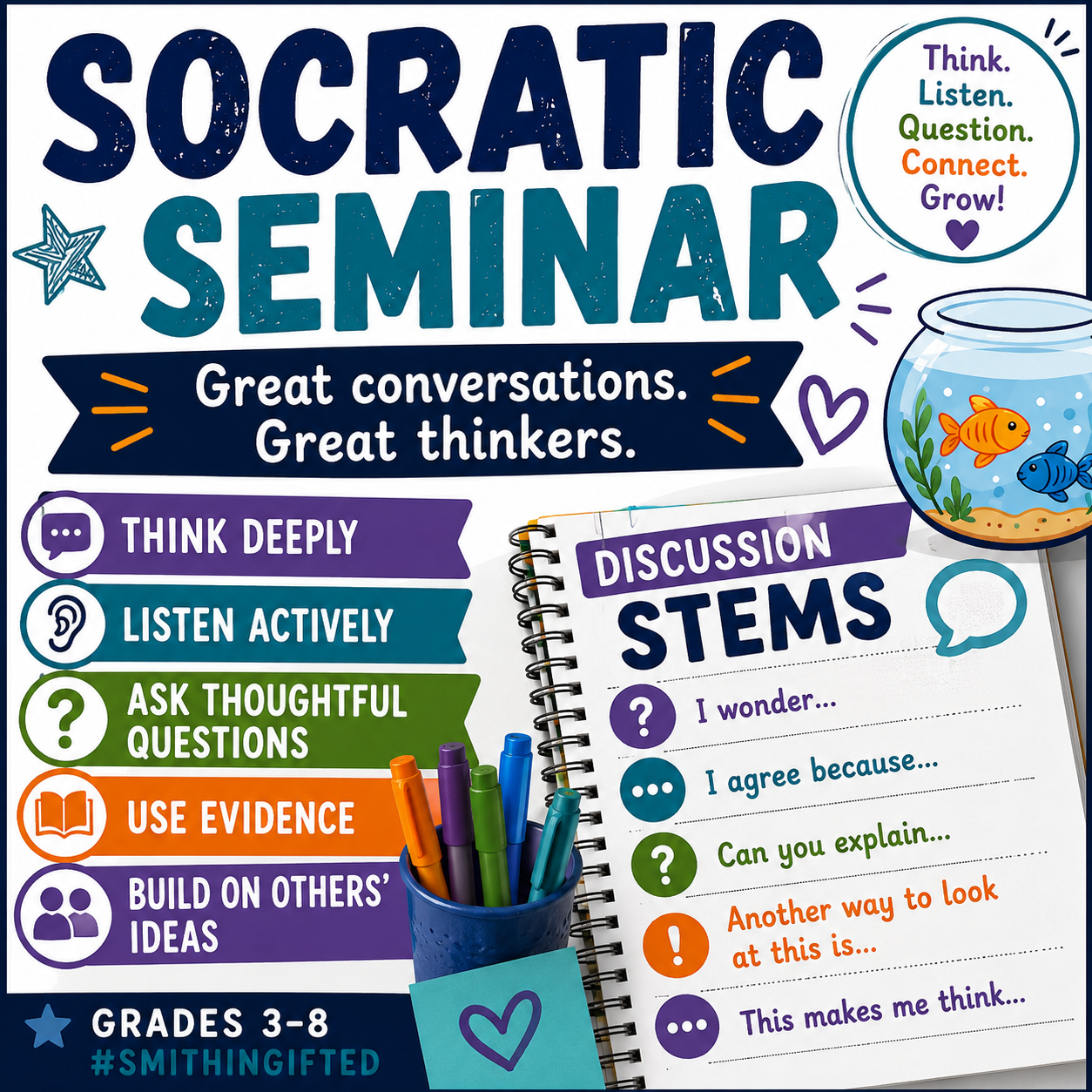
Socratic Seminars help students become stronger thinkers, listeners, and communicators by encouraging evidence-based discussion, respectful disagreement, and deeper questioning. This blog explores practical ways to use Socratic Seminars across subjects and introduces the #smithingifted Socratic Seminar Ultimate Growing Bundle for grades 3–8.
-
FarmBeats for Students: Hands-On Agriculture STEM with micro:bit (Grades 3–8)

Discover how FarmBeats for Students and the BBC micro:bit bring agriculture, coding, and engineering together through engaging, hands-on STEM activities. This blog explores how students can collect real-world data, solve authentic farming challenges, and develop critical thinking, problem-solving, and computational skills while preparing for the careers of tomorrow. Perfect for teachers looking to make STEM…
-
🎯 John Hattie’s Visible Learning Research: What It Means for Gifted Students in Grades 3–5
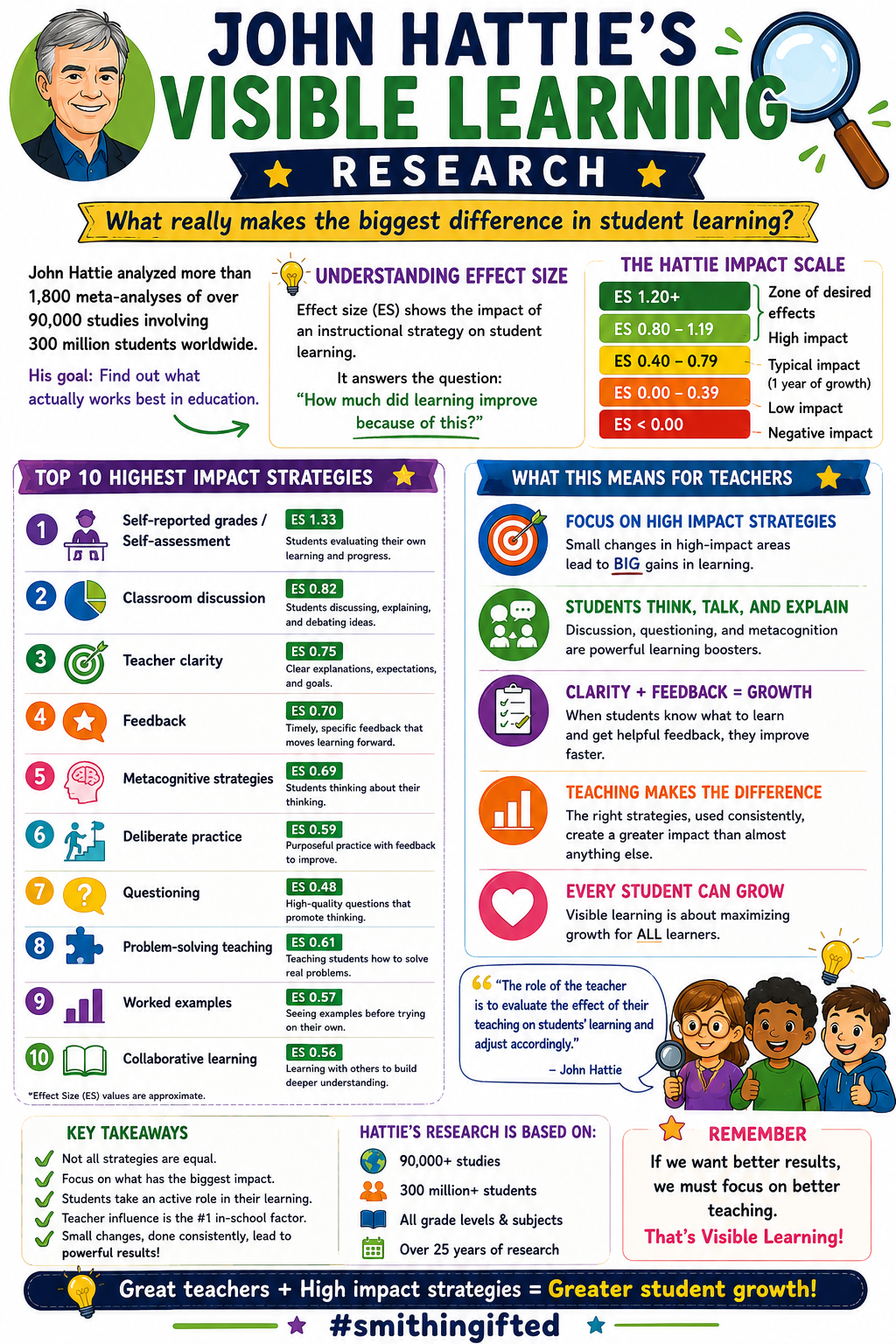
🕵️ Self-Assessment is a powerful part of the Pattern Detective Thinking Lab because it helps gifted learners reflect on their own growth. Instead of focusing only on getting the correct answer, students evaluate how well they identified patterns, explained their reasoning, created original patterns, and taught their thinking to others. By setting goals and recognizing…
-
Using Google My Maps in the Gifted Classroom: Mapping The Global Innovation Lab
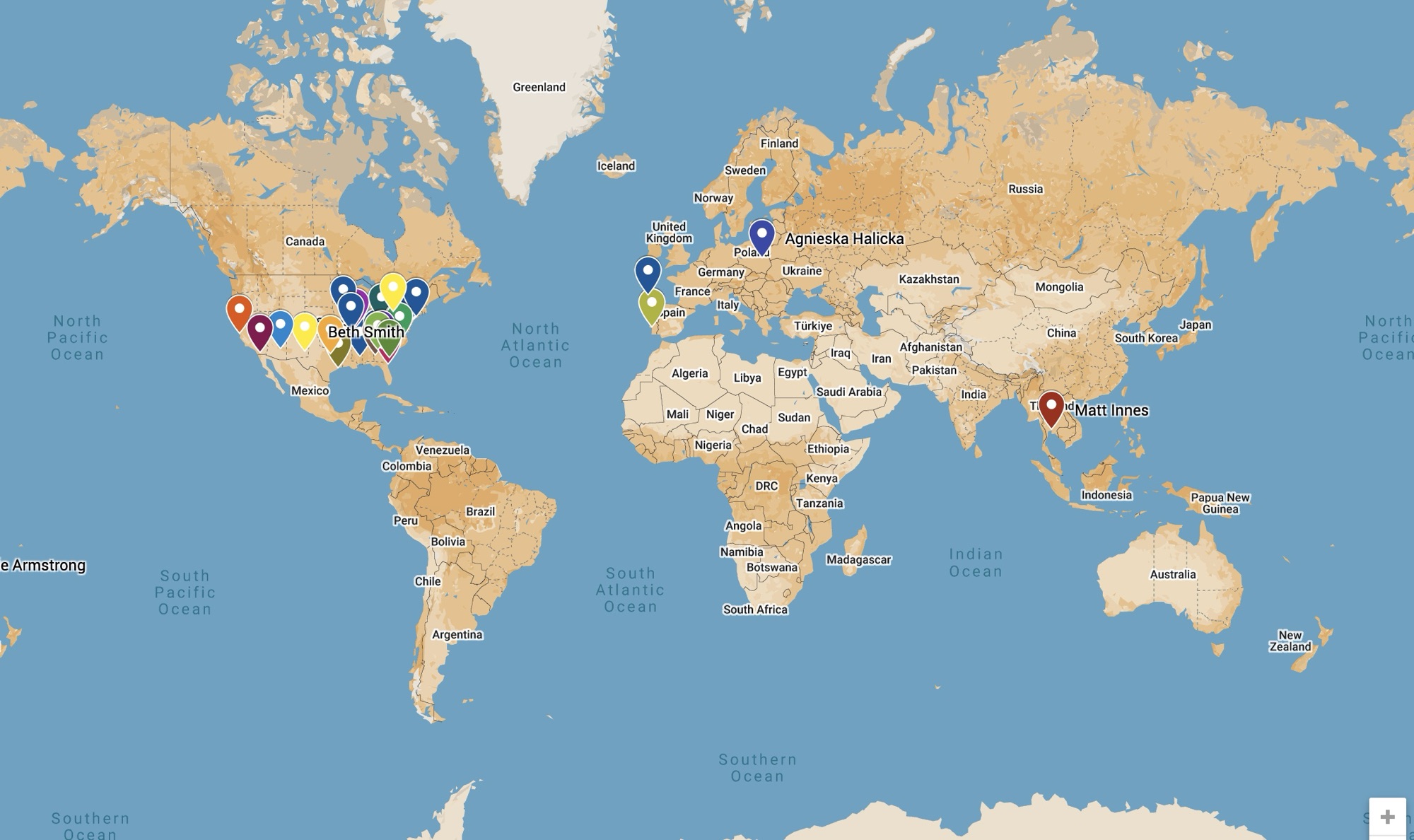
The Global Innovation Lab is growing! 🌎🚀 In this post, I share how Google My Maps is helping us connect classrooms around the world so students can collaborate on real-world challenges like water conservation. If you want your students to think bigger, create meaningful solutions, and learn alongside students from other communities and countries, I…
-
Stop Giving Every Gifted Student the Same Assignment: A Better Way to Differentiate
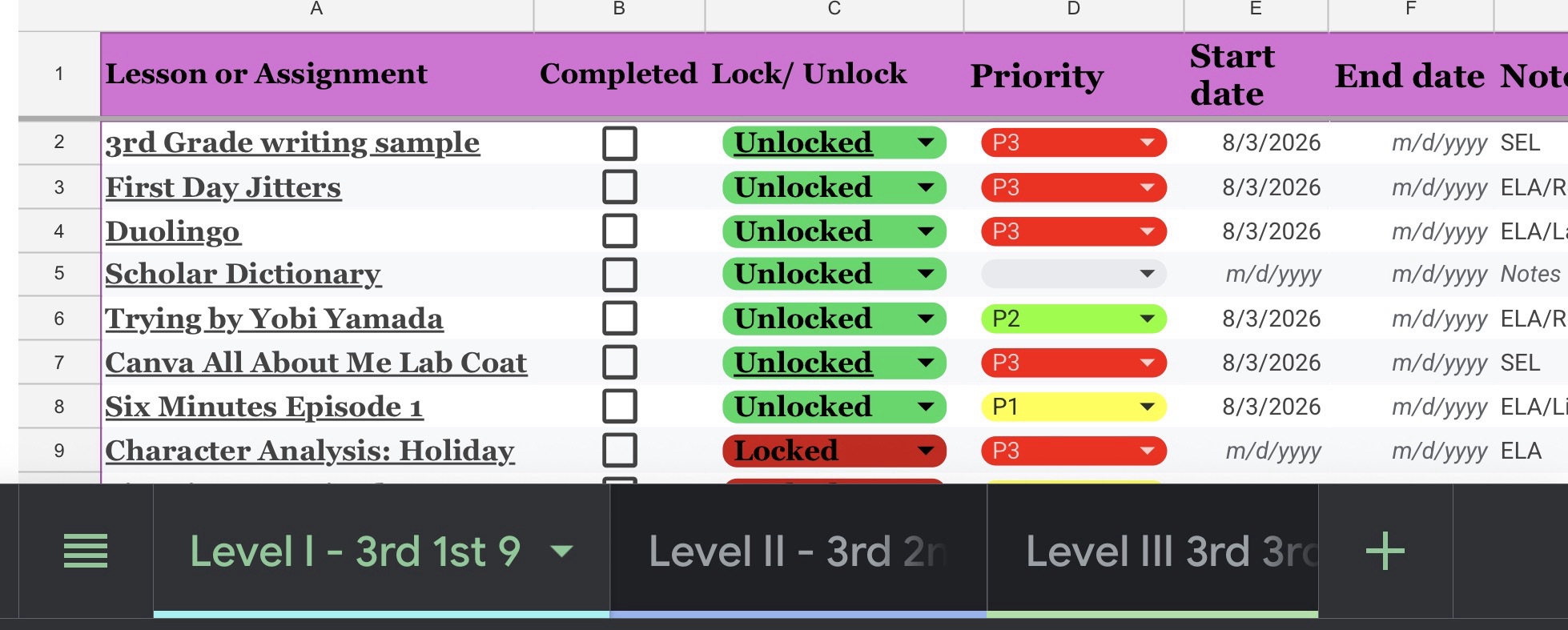
Discover how the #smithingifted curriculum transforms differentiation by allowing gifted students to learn at their own pace through four levels of challenge: Explorer, Engineer, Innovator, and Visionary. Instead of giving every student the same assignment or making advanced learners wait, this approach promotes student choice, independence, creativity, and authentic problem-solving. Learn how self-paced learning, badge-based…
-
Boredom Isn’t the Enemy… It’s the Beginning of Innovation
By Beth Smith, M. Ed. | #smithingifted I’m bored.” Every teacher has heard those two words. Parents hear them during the summer. Teachers hear them during the school year. We often scramble to solve the problem by handing children another worksheet, another app, another video, or another activity. But what if boredom isn’t actually the…
-
📊 Google Sheets in the Gifted Classroom: Building Data Literacy for Future Innovators
By Beth Smith | #smithingifted Could Google Sheets Be the Most Underrated Tool in Your Gifted Classroom? When most teachers think about Google Sheets, they think about gradebooks or budgets. In my gifted classroom, it’s something entirely different—it’s a tool that helps students think, collaborate, and solve real-world problems. My students use Google Sheets to…
-
🎙️Giving Every Student a Voice: The Power of Podcasting in the Gifted Classroom
By Beth Smith, M. Ed. | #smithingifted One of my favorite ways to engage gifted learners is through student-created podcasts. I will never forget my first attempt at Podcasting. Look how far we have come in education and technology. I taught 6th grade Reading at Lincoln Middle School in Rio Rancho, NM. My students came…
-
Build Your own My Teacher Second Brain
A Simple AI Context Tool for Educators By Beth Smith, M. Ed. | #smithingifted Every time you start a new AI conversation, the tool usually starts from zero. It does not automatically know who you are, what you teach, how you communicate, what your students need, or what kind of support actually helps you. My…