By Beth Smith, M.Ed. | #smithingiftefd
If you know me, you know I do not like a lot of fluff in my classroom.
Something might be cute. It might be colorful. Students might love it. But if it does not have a real academic purpose, I probably do not need it.
So why do my gifted students have rubber ducks?
Let me tell you.
Duckventures may begin with a funny little rubber duck, but it quickly becomes a serious writing program. Each student chooses a duck and turns it into a character with a name, personality, strengths, weaknesses, interests, fears, and backstory.
Then that same character travels through twelve very different writing challenges.
The duck stays the same. The writing does not.
Why Keep the Same Character?
When students receive a brand-new writing prompt, they often spend most of their time deciding what to write.
Who is the character? Where does the story happen? What is the problem? What should the character say? How should it end?
By the time they make all those decisions, the class period is nearly over—and very little writing has happened.
Duckventures removes that problem.
Students already know their main character. They know how their duck talks, what it likes, what it fears, and how it might respond to a difficult situation. They do not have to start over every time.
That gives them more time to focus on the actual writing skill.
It also helps students develop a character with depth. Their duck is not a random character that appears in one story and then disappears. It grows across the entire program. Students add new details, experiences, relationships, and problems with every assignment.
They become invested in the character—and that makes them more invested in the writing.
One Duck Does a Lot of Work
Duckventures is not twelve versions of the same creative-writing assignment.
Each lesson asks students to use a different type of writing, think about a different audience, and solve a different problem.
Students begin with Meet My Duck, where they introduce the character and establish its personality and background.
Then the duck goes missing. Students must write a complete narrative with a clear beginning, middle, problem, and resolution.
After that, the challenges keep changing:
- In Duck’s Dream Vacation, students combine geography research with travel writing.
- In Duck News Network, they write headlines, interviews, and news reports.
- In Duck Inventor Lab, they identify a problem, design a solution, and explain how it works.
- In Time-Traveling Duck, they use historical research to create a believable adventure.
- In Duck Courtroom Trial, they develop claims, evidence, and counterarguments.
- In Survival Duck, they make decisions under pressure and justify their choices.
- In Duckspiracy Files, they investigate clues and separate evidence from assumptions.
- In Duck CEO Challenge, they develop a business idea and persuasive pitch.
- In Duck Podcast Adventures, they write for listeners by creating scripts, interviews, and sound effects.
- In AI Duck of the Future, they explore science fiction, innovation, and ethical questions.
That is a lot of academic work for one little rubber duck.
The Real Challenge Is Transfer
Gifted students may show that they understand a writing skill during one lesson and then completely forget to use it in the next assignment.
A student may include strong details in a narrative but leave them out of an informational piece. Another may defend an idea beautifully during a classroom discussion but struggle to put the same reasoning into writing.
That is why changing the genre matters.
Students must learn that writing changes depending on the purpose and audience. A news report should not sound like a personal narrative. A courtroom argument needs evidence. A podcast script must make sense to someone who cannot see the speaker. A business pitch must clearly explain the problem and why the proposed solution has value.
The duck provides consistency, but the assignments require flexibility.
Students repeatedly have to ask:
- Who is my audience?
- What is my purpose?
- How should I organize this piece?
- What information belongs here?
- What evidence do I need?
- How should my duck’s voice sound in this situation?
- Which skills from an earlier assignment can I use again?
That is the kind of transfer I want to see in my gifted classroom.
Making Growth Easy to See
Every Duckventures assignment goes into the student’s writing folder.
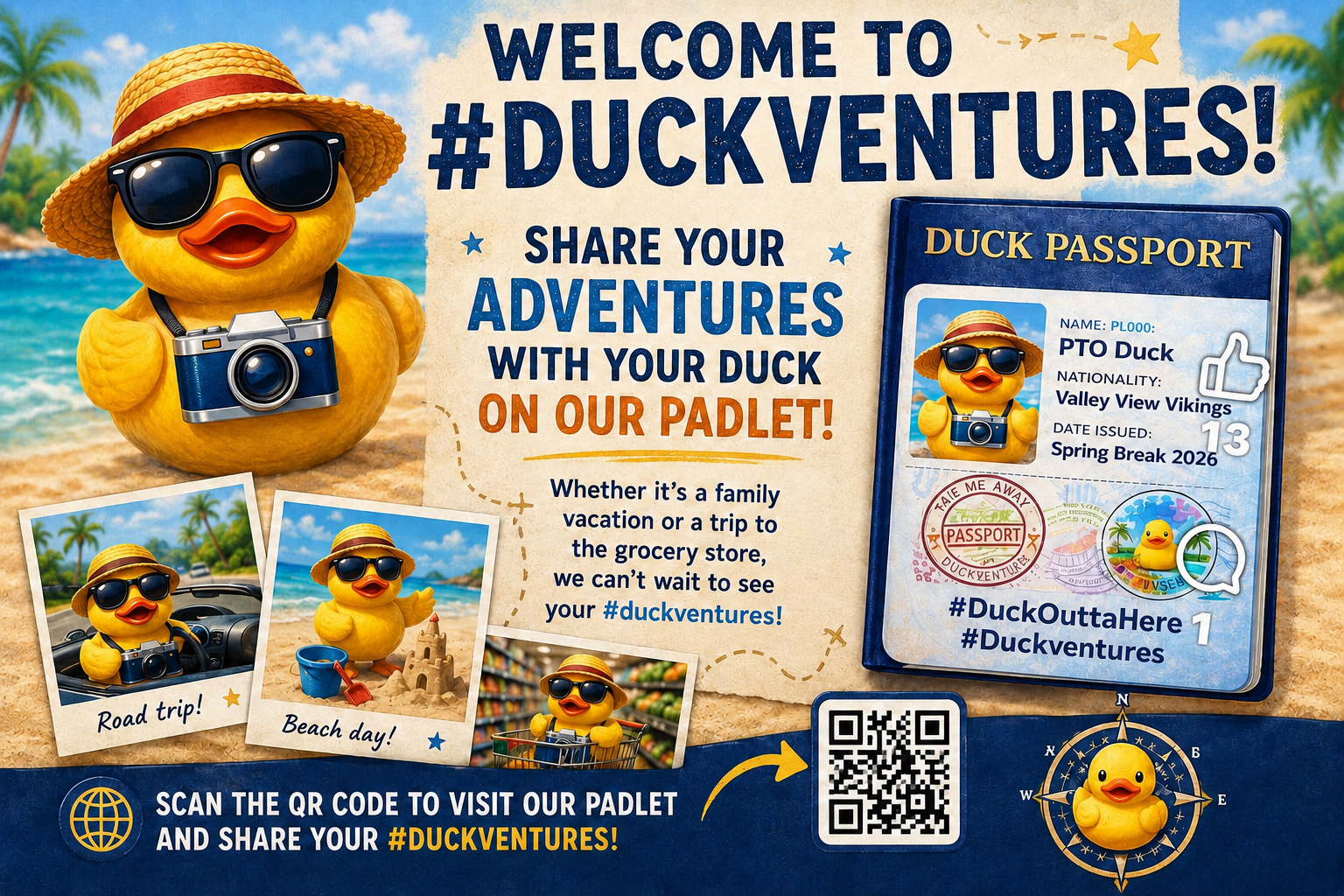
Students also use a Duckventures Passport to keep track of completed missions. The passport and stickers are fun, but they also provide a visible record of progress.
After each assignment, students complete a short reflection:
- What did I do well?
- What did I improve?
- What revision made my writing stronger?
- What do I need to work on next?
- Which skill from an earlier lesson did I use again?
Students can then compare their first assignment with their latest one. They can see changes in organization, details, vocabulary, sentence structure, conventions, voice, evidence, and awareness of audience.
I can also see patterns that one writing sample would never reveal.
I can identify the students who write creatively but need help with organization. I can see who has strong ideas but needs explicit instruction in conventions. I can recognize which students transfer skills independently and which students still need checklists, models, or conferences.
The folder shows the whole writing journey.
My Original Plan Did Not Last Long
My original goal was to use Duckventures for three years, with students completing four writing samples each year. I thought twelve lessons would give them plenty of time to develop their characters and show steady growth from third through fifth grade.
My students had a different plan.
As soon as they finish one lesson, they want to begin the next adventure. They are not asking, “Do we have to write today?” They are asking, “What happens to our ducks next?”
That is the kind of problem a writing teacher wants to have.
Their excitement tells me the program is doing exactly what I hoped it would do: giving students a reason to write while still building serious skills.
It Is Fun—but It Is Not Fluff
Yes, students enjoy choosing a rubber duck.
Yes, they enjoy creating personalities, collecting passport stickers, and discovering what challenge their duck will face next.
But the duck is not there just to be cute.
It gives students a familiar starting point, reduces decision fatigue, encourages character development, and connects multiple genres of writing. Through one recurring character, students practice narrative, informational, persuasive, argumentative, historical, journalistic, technical, business, podcast, and science-fiction writing.
The duck gets students excited enough to begin.
The structure makes sure they continue to grow.
At this rate, I will need to add more lessons very soon—as soon as I get all my ducks in a row!
What recurring character, object, or theme could connect an entire year of writing in your classroom?
#smithingifted