#smithingifted
-
The Benefits of Google Suite in the Gifted Classroom

-
🎯 John Hattie’s Visible Learning Research: What It Means for Gifted Students in Grades 3–5
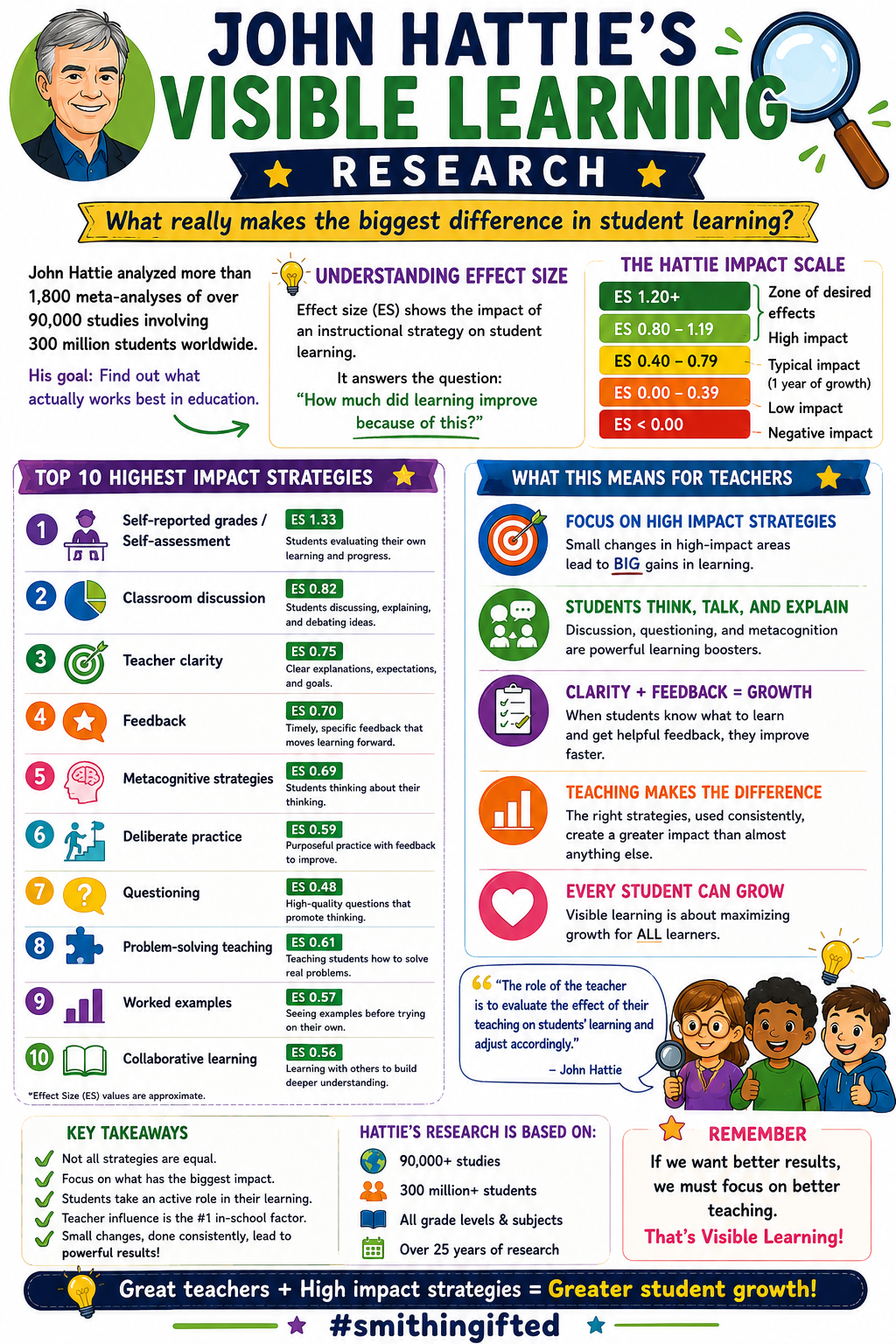
🕵️ Self-Assessment is a powerful part of the Pattern Detective Thinking Lab because it helps gifted learners reflect on their own growth. Instead of focusing only on getting the correct answer, students evaluate how well they identified patterns, explained their reasoning, created original patterns, and taught their thinking to others. By setting goals and recognizing…
-
🕵️ Pattern Detectives: Building the Thinking Skills Gifted Learners Need

🕵️ Pattern Detectives transforms gifted readiness into an exciting mystery-solving adventure! Designed for K–2 students, this engaging #smithingifted Thinking Lab helps children develop pattern recognition, logical reasoning, and critical thinking through hands-on challenges instead of traditional test prep. Students become detectives as they uncover hidden rules, predict what comes next, create their own patterns, and…
-
Why I Love Teaching the Hero’s Journey in Gifted Education

-
Using Google My Maps in the Gifted Classroom: Mapping The Global Innovation Lab
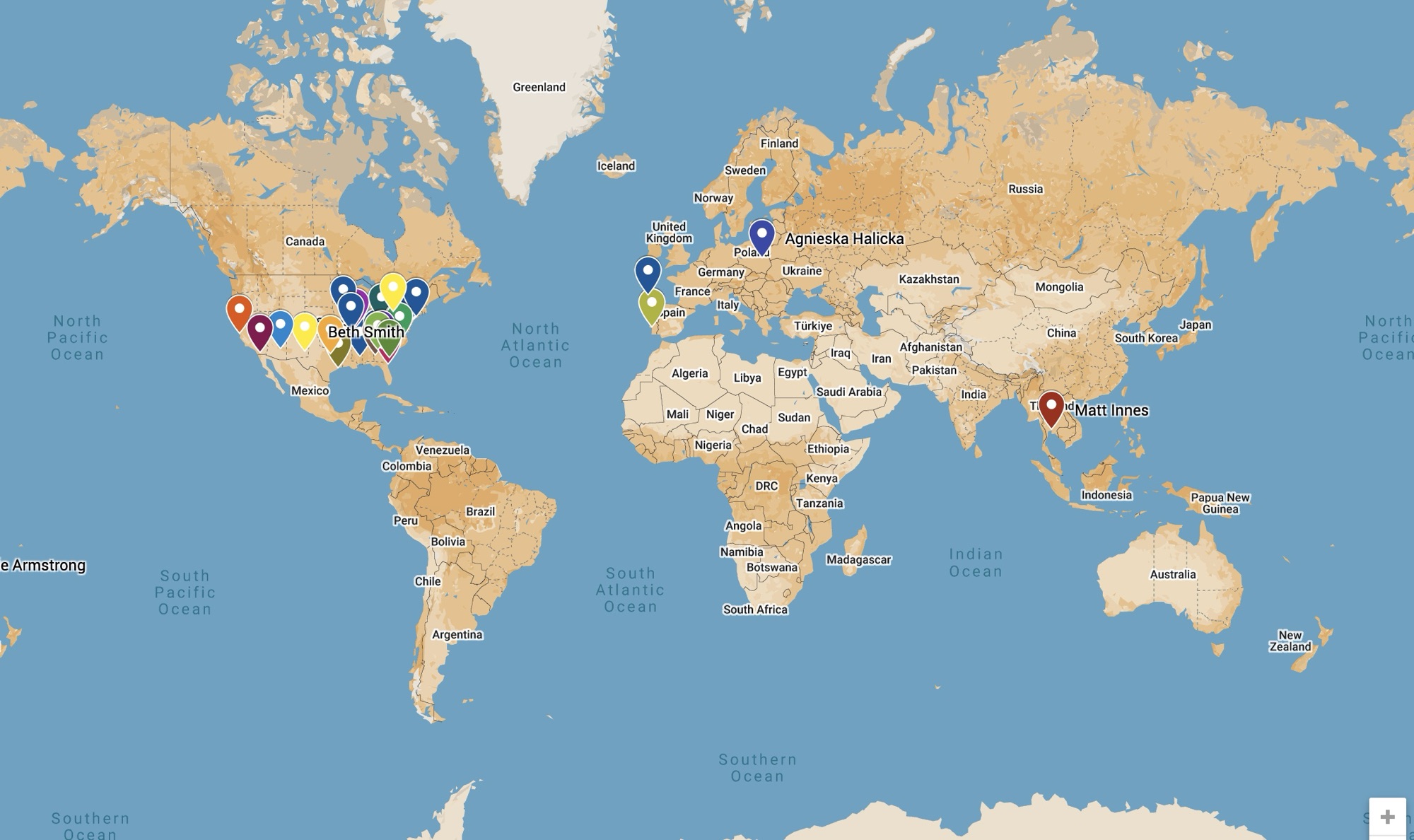
The Global Innovation Lab is growing! 🌎🚀 In this post, I share how Google My Maps is helping us connect classrooms around the world so students can collaborate on real-world challenges like water conservation. If you want your students to think bigger, create meaningful solutions, and learn alongside students from other communities and countries, I…
-
Why I Grade Student Assignments in #smithingifted — Even When They Don’t Go on a Report Card

In this #smithingifted blog post, I explain why I grade gifted student assignments even though they do not appear on a traditional report card. My simple 1–4 grading system helps students understand expectations, gives meaningful feedback, creates accountability, and provides clear documentation for progress reports. For gifted teachers, this system makes it easier to track…
-
Welcome to #smithingifted: Where Gifted Learners Think Bigger, Create More, and Lead the Way

#smithingifted is a resource space for gifted teachers who want more than basic enrichment. Created by gifted educator Beth Smith, #smithingifted focuses on rigorous, creative, and ready-to-use resources for gifted and high-ability learners, especially in STEM, robotics, coding, design thinking, student choice, and real-world problem solving. From classroom projects to innovation challenges, these resources are…
-
Making Algebra Click: Using Hands-On Equations in the 3rd–5th Grade Gifted Classroom

Hands-On Equations gives 3rd–5th grade gifted students a concrete, visual way to build early algebraic thinking. Through manipulatives, balance models, math talk, and self-paced challenges, students learn to solve equations, explain their reasoning, and develop confidence with complex problem-solving. It fits naturally into the #smithingifted curriculum by supporting differentiation, mastery, badges, and deeper mathematical thinking.
-
Choice, Pace, and Purpose: Gifted Students Shouldn’t Have to Wait for Their Next Assignment
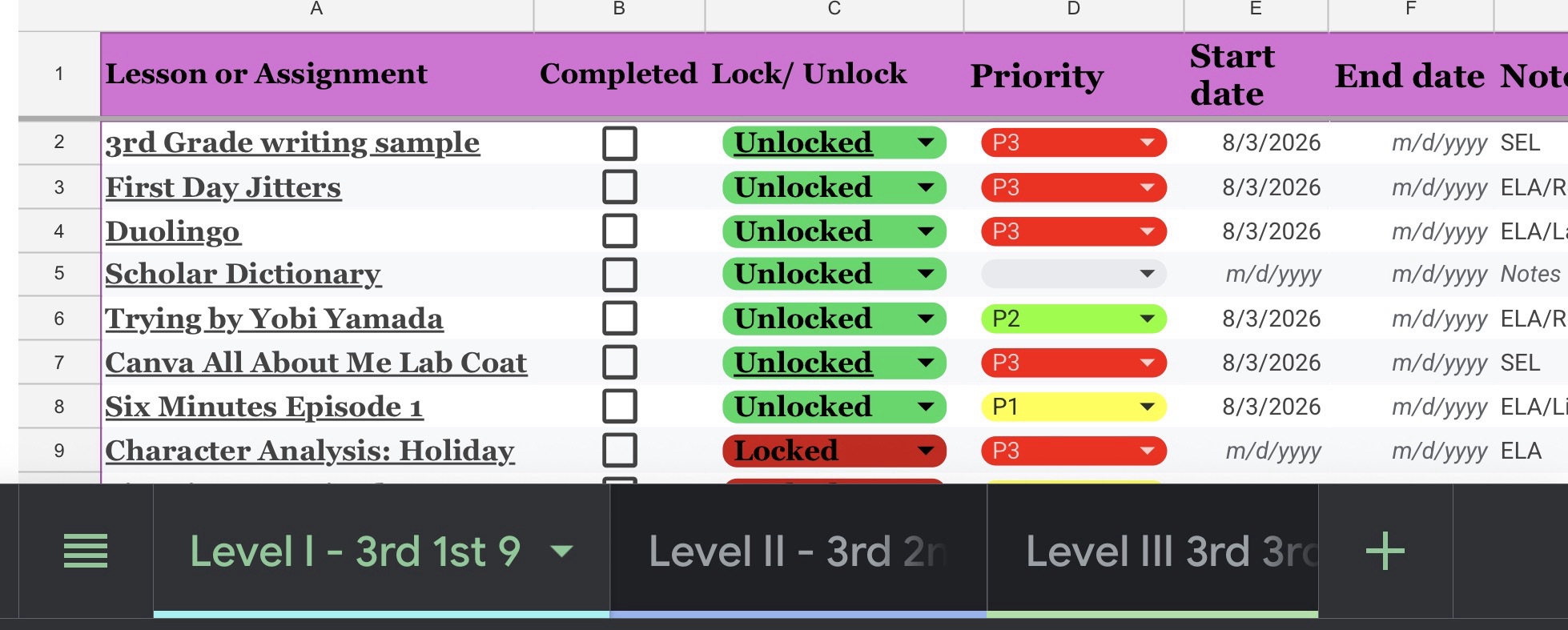
This blog post explores why gifted students need choice, flexible pacing, and meaningful purpose in their learning. Instead of making fast finishers wait or giving them extra busy work, the #smithingifted model allows students to move forward through choice-based pathways, badges, portfolios, STEM, robotics, coding, research, and extension challenges. Gifted education is not about giving…
-
Building a Coding & Robotics Continuum for Gifted Learners 🤖💡
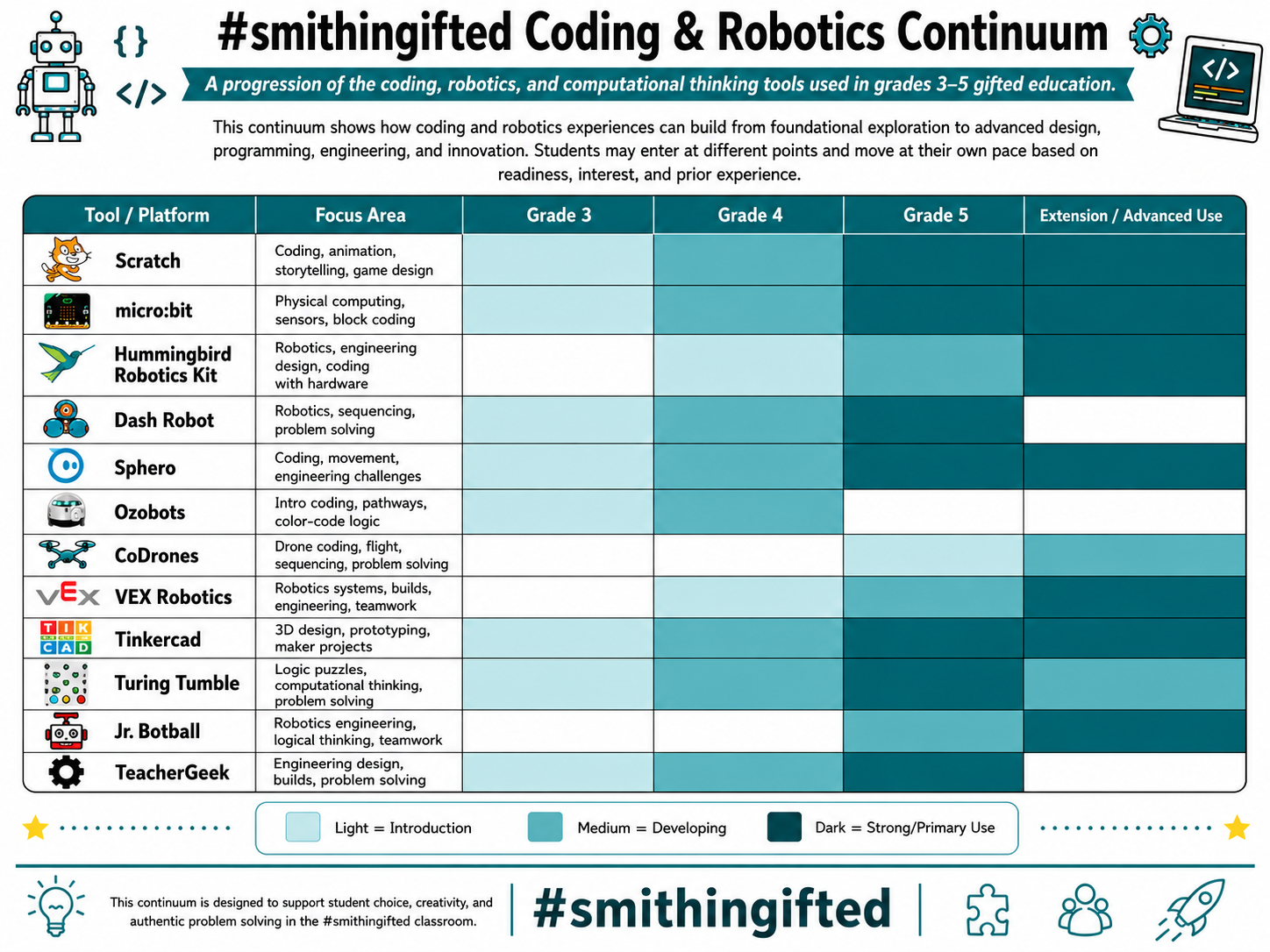
This blog explains how the #smithingifted Coding & Robotics Continuum organizes STEM tools into a purposeful, 3-year learning pathway for 3rd–5th grade gifted students. Instead of using coding and robotics as random activities, the continuum helps students move from introduction to developing skills to strong, independent use across four nine-week cycles each year. It highlights…